
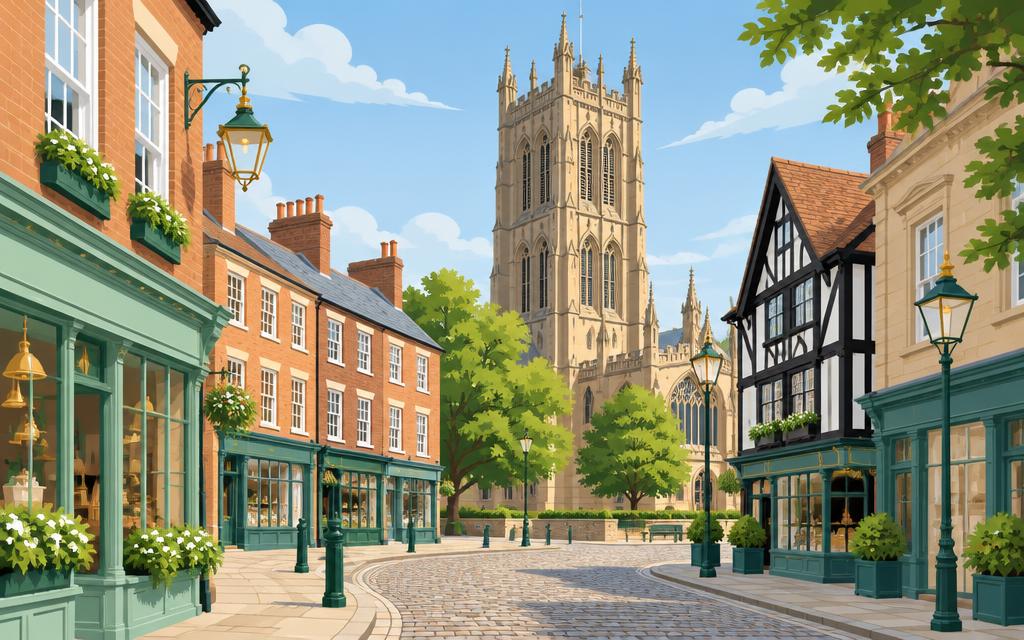
A city on the River Derwent
Derby sits on the banks of the River Derwent in the south of Derbyshire, where the lowlands meet the edge of the Peak District. It has been a city since 1977, and its compact centre is built around the Cathedral Quarter, the Market Place and the towering Perpendicular tower of Derby Cathedral.
The city is the natural hub for a ring of neighbourhoods and nearby villages including Allestree, Mickleover, Littleover, Spondon, Chaddesden, Chellaston, Alvaston, Sinfin, Oakwood and Duffield - which is why this directory covers the whole district, not just the city centre.
Birthplace of the factory
Derby has a strong claim to be the birthplace of the modern factory system. Lombe's Mill, built beside the Derwent in the early eighteenth century, was among the world's first successful mechanised silk mills. Today the site is the Museum of Making at Derby Silk Mill, and the surrounding Derwent Valley Mills are a UNESCO World Heritage Site.
Made in Derby
Making things is still what Derby does. Rolls-Royce has built aero engines in the city for generations, Derby is home to one of the largest rail industry clusters in Europe, and Royal Crown Derby has produced fine bone china in the city since the eighteenth century. The Derby Ram, the city's symbol, has a statue on East Street.
Markets and shopping
Derby Market Hall, a restored Victorian market hall beside the Market Place, with access from Tenant Street, is the city's traditional heart for fresh produce, street food and independent traders. Around it, the Cathedral Quarter and St Peters Quarter mix national names with independent shops, cafes and bars.
Getting around
Derby station sits on the Midland Main Line with direct trains to London St Pancras, Sheffield, Nottingham and Birmingham. The city is close to the M1 and well connected by the A38, A50 and A52, and local buses link the centre with the suburbs and surrounding villages.
There are several city centre car parks within a short walk of the Market Place and Derbion. Check signage for current charges and time limits.
Spotted something out of date? Let us know.